
Streetwear
The Rise of Streetwear: How the Sidewalk Became the Runway
It began with surfboards, spray paint and a stack of screen-printed tees sold out of a Los Angeles storefront. Four decades later, streetwear dictates the pace of luxury itself — a story of subculture, scarcity and self-invention.
Aria Deveraux — Editor-at-Large, Fashion-Aura
July 28, 2026 · 12 min read

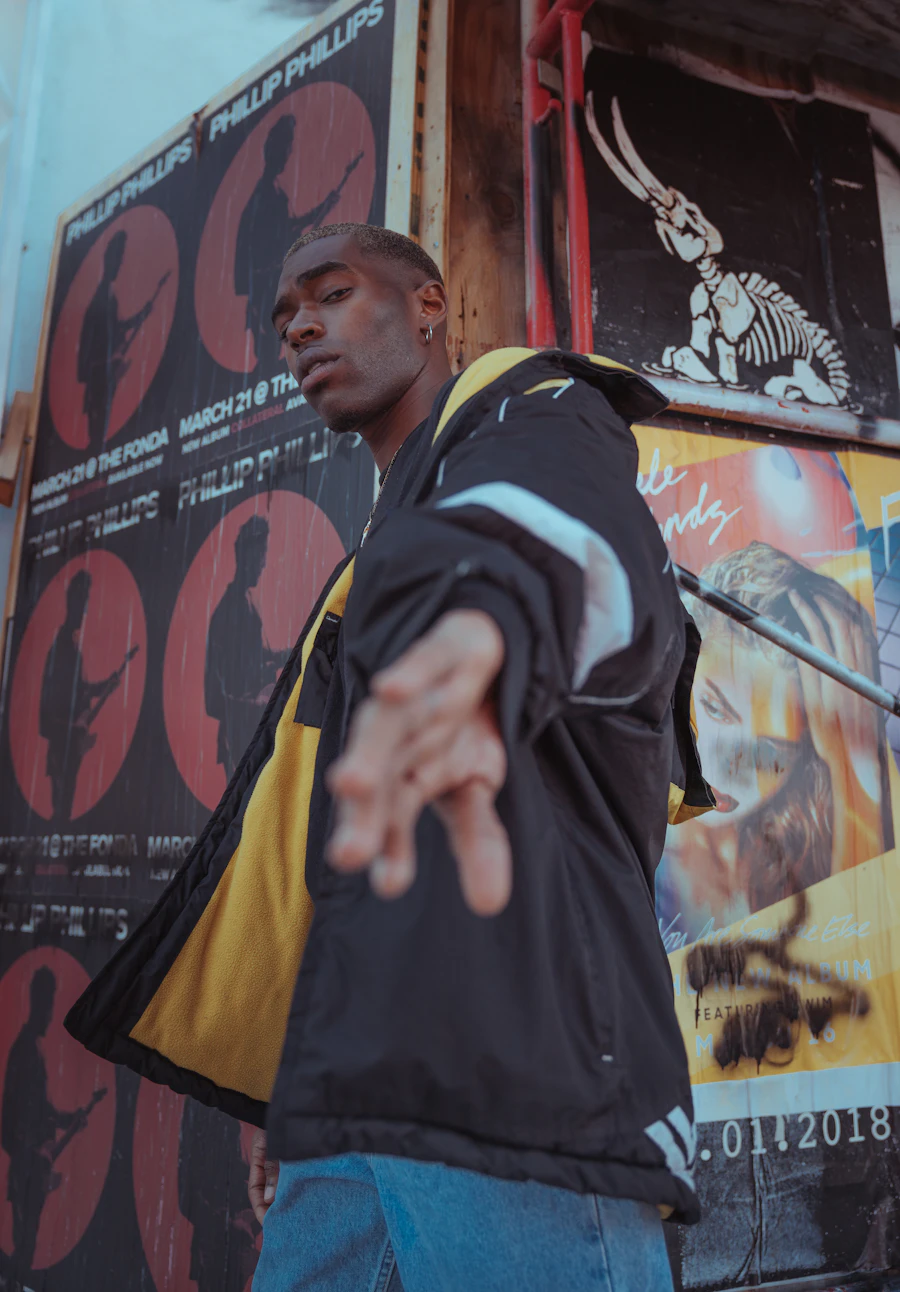
Oversized proportions and layered utility — the streetwear grammar of the last decade.
01 — Introduction
What streetwear actually is
Streetwear is not a garment. It is a posture. Long before it filled the front rows of Paris, it was a way for people outside the fashion system to announce that they had taste anyway — assembled from skate shops, record stores, sportswear catalogues and whatever the older kids on the block were wearing. The clothes were simple: a heavyweight tee, a hooded sweatshirt, roomy trousers, a sneaker with a story. The meaning was not.
What separates streetwear from ordinary casualwear is the code attached to it. Scarcity, community and authorship matter as much as cotton weight. A hoodie made in a run of three hundred says something a hoodie made in a run of three hundred thousand cannot, and everybody in the room fluent in the language hears it immediately.
That fluency is why the category has outlasted every obituary written for it. It is self-renewing: each generation rewrites the graphics, adjusts the silhouette and keeps the underlying grammar intact.
02 — History
From a surfboard signature to a global industry
The origin story begins in Laguna Beach, California, in 1976. Shawn Stussy, a young surfboard shaper, signed his boards with a looping marker script that looked closer to graffiti than to branding. When he printed that same signature on T-shirts to sell alongside the boards, he accidentally invented the modern logo tee — and, with it, the idea that clothing could function as membership.
Three thousand miles east, New York was building the other half of the vocabulary. Hip hop, breakdancing and graffiti crews adopted sportswear — tracksuits, bucket hats, shell-toe sneakers — and charged it with competitive pride. Sneakers stopped being equipment. They became trophies.
The industrial breakthrough came from Tokyo. In the narrow lanes of Ura-Harajuku, Hiroshi Fujiwara and Nigo studied American subculture with archivist precision and returned it refined: tiny production runs, obsessive detail, deliberately inadequate supply. When James Jebbia opened Supreme on Lafayette Street in 1994, the model crossed back over the Pacific and calcified into ritual. The queue became part of the product. Why did it explode? Because it offered what luxury withheld — belonging you could earn by paying attention rather than by inheriting money.
Timeline
1976 — Los Angeles, USA
Surfboard shaper Shawn Stussy scrawls his signature on boards, then on T-shirts. The logo tee is born as a badge for insiders.
1983 — New York, USA
Hip-hop, graffiti and B-boy culture fuse sportswear with attitude. Sneakers stop being equipment and start being identity.
1990 — Tokyo, Japan
Hiroshi Fujiwara and Nigo turn Ura-Harajuku into a laboratory of limited drops, inventing the scarcity model that still rules today.
1994 — New York, USA
James Jebbia opens Supreme on Lafayette Street. Skate culture gains a cathedral, and the queue becomes part of the product.
2017 — Paris & Milan
Louis Vuitton x Supreme lands. Luxury stops resisting the sidewalk and starts borrowing its grammar.
2018 — Global
Virgil Abloh is named artistic director of Louis Vuitton menswear. The outsider is handed the keys to the house.
2026 — Everywhere
Streetwear is no longer a genre but a default — quieter, better made, and increasingly resold before it is ever worn.
03 — Evolution
Four decades of shifting silhouettes
The nineties were baggy and loud, all wide legs and printed logos worn like flags. The 2000s slimmed everything down, borrowing from indie rock and European tailoring until jeans looked painted on. Then the mid-2010s arrived with the great collision: luxury houses hired streetwear designers, and streetwear labels started using Italian mills.
By 2020 the aesthetic had inverted itself again. Logos shrank, palettes drained to bone and charcoal, and the flex moved from what was printed on the chest to how the shoulder was cut. Today’s version is quieter, heavier, better constructed and — importantly — designed with a resale life in mind. The culture matured without losing its accent.
The nineties: volume as statement.

Now: neutral, heavy, deliberately quiet.
04 — Why People Love It
Eight reasons the obsession endures
Radical self-expression
Every layer is editable. A jacket, a patch, a lace swap — the outfit becomes an autobiography rather than a uniform.
Scarcity as romance
Limited drops turn shopping into ceremony. Owning the piece means you were awake, informed and fast.
Instant community
A silhouette recognised across continents. Streetwear is a handshake between strangers in different cities.
Comfort without compromise
Soft fleece, roomy cuts and cushioned soles deliver ease that tailoring spent a century refusing to offer.
Endless versatility
One hoodie reads skate park with cargos and gallery opening under a wool overcoat.
Real resale value
Certain pieces behave like assets, appreciating quietly in dust bags while trends churn overhead.
Art you can wear
Graphics carry photography, protest and painting — a rotating exhibition on cotton.
Democratic luxury
It flattened the hierarchy. A teenager and a CEO can want, and wear, exactly the same shoe.
05 — Celebrity Influence
The names that moved the needle
No advertising budget has ever matched the power of the right person walking through an airport. Streetwear grew through proximity to music, sport and art — and the figures below did not merely wear the clothes, they redirected them.

Virgil Abloh
Designer, Off-White & Louis Vuitton
Rewrote the rulebook by treating quotation marks, zip ties and irony as couture materials.

Rihanna
Musician & Founder, Fenty
Made oversized proportions and utilitarian layering feel unmistakably glamorous.

Pharrell Williams
Musician & Creative Director
Bridged skate, hip-hop and heritage tailoring long before the industry admitted they belonged together.

Hailey Bieber
Model & Founder
Popularised the pared-back, neutral streetwear uniform that defined the last five years of city dressing.

A$AP Rocky
Musician & Style Icon
Turned the street into a styling studio, mixing workwear, couture and vintage without hierarchy.

Nigo
Founder, A Bathing Ape
Engineered the drop model in Harajuku and exported it to the world.
06 — Styling Guide
How to wear it well
Good streetwear styling is an exercise in proportion, not accumulation. Start with the shape of your body, choose one place to add volume, and let everything else stay disciplined. The rest is edit, edit, edit.
How to wear it
Pick one hero piece — the jacket, the sneaker or the graphic — and style everything else as support. Cuff or hem your trousers so the shoe reads clearly, and keep layers to three visible thicknesses.
Best colour combinations
Black with bone. Charcoal with stone. Olive with cream and a flash of gold hardware. If you want colour, keep it to one saturated note against neutrals.
Shoes
A low-profile leather sneaker in white or black covers ninety per cent of outfits. Add a chunky runner for wide-leg trousers and a suede boot for cold months.
Accessories
A structured cap, a fine gold chain, a slim crossbody bag and one good watch. Metals should agree with each other; mixing reads unfinished.
Spring & summer
Boxy short sleeves, breathable cotton, pleated shorts hitting just above the knee, and canvas or mesh footwear. Keep the palette light and the fabrics dry.
Autumn & winter
Heavyweight hoodie under a wool overcoat, thermal base layers, cargos in brushed twill and a beanie in a matching neutral. Texture replaces print as the interest.
07 — Best Brands
Six houses that define the category
SUP — Supreme
The New York skate shop that turned the Thursday drop into global ritual. Red box logo, zero explanation.
OW — Off-White
Virgil Abloh’s design dialect — industrial belts, diagonals and quotation marks that made irony wearable.
BAPE — A Bathing Ape
Harajuku’s camo empire. Shark hoodies, playful graphics and the original scarcity playbook.
STY — Stüssy
The California original. Four decades on, still the most quietly influential signature in the category.
FOG — Fear of God
Jerry Lorenzo’s elevated essentials: muted palettes, luxurious drape, sermon-like restraint.
PAL — Palace
London skate wit with tri-ferg logos and a sense of humour sharper than most ad campaigns.
08 — Fashion Tips
Six rules worth memorising
01. Anchor the volume
If the top is oversized, keep the bottom tapered — or vice versa. One exaggerated shape per outfit reads intentional; two read accidental.
02. Invest in the outer layer
A beautifully cut bomber or wool overcoat elevates every basic underneath it. Spend where the eye lands first.
03. Limit yourself to one logo
Let a single graphic speak. Competing branding cancels itself out and cheapens both pieces.
04. Respect the hem
A tailor is cheaper than a new pair of trousers. The break above your sneaker is the difference between styled and sloppy.
05. Build a neutral spine
Black, bone, charcoal and stone mix effortlessly. Add colour deliberately, in one accessory or one layer.
06. Rotate your sneakers
Twenty-four hours of rest keeps foam and leather alive. Cedar inserts do more for longevity than any cleaner.
09 — Pros & Cons
An honest balance sheet
The Case For
- Extremely comfortable for long city days without looking careless
- Endlessly mixable with tailoring, vintage and formal pieces
- Strong resale market softens the cost of considered purchases
- Season-agnostic layering works across most climates
- Community and culture attached to almost every piece
The Case Against
- Hype pricing can wildly exceed material and construction quality
- Bot-driven drops make fair access frustrating for real fans
- Counterfeits are widespread and increasingly convincing
- Fast-cycling graphics can date a wardrobe within a single year
- Overproduction raises real questions about waste and sustainability
10 — Future of the Trend
Where it goes from here
Streetwear will not disappear, because it was never really a trend — it is the way most of the world now gets dressed. What changes is the register. The next decade belongs to construction over graphics: better fabric, repairable seams, garments designed to be resold twice and still look intact.
Expect three forces to shape it. Provenance, as digital authentication makes an item’s history part of its value. Craft, as buyers who grew up on hype start paying for longevity instead of adrenaline. And locality, as scenes in Lagos, Seoul, São Paulo and Mumbai stop referencing New York and start exporting their own grammar.
“The street never followed fashion. Fashion finally admitted it had been following the street the whole time.”
The sidewalk, in other words, keeps its authorship. The runway simply learned to read.
11 — FAQs
Frequently asked questions
What exactly is streetwear?
Where did streetwear originate?
Answer content to be added.
Who is considered the father of streetwear?
Answer content to be added.
Is streetwear still in style in 2026?
Answer content to be added.
How do I start a streetwear wardrobe on a budget?
Answer content to be added.
What is the difference between streetwear and athleisure?
Answer content to be added.
Why is streetwear so expensive?
Answer content to be added.
How should streetwear fit?
Answer content to be added.
Can you wear streetwear to the office?
Answer content to be added.
How do I spot fake streetwear?
Answer content to be added.

Written by Aria Deveraux
Editor-at-Large, Fashion-Aura
Aria has spent twelve years covering the intersection of subculture and luxury, from Tokyo’s Ura-Harajuku alleys to Milan’s showroom floors. She writes about clothing as a language people wear out loud.
The Aura Letter, every Sunday
One considered essay on style, one archive find and one thing worth buying. No noise, no spam — unsubscribe whenever you like.